


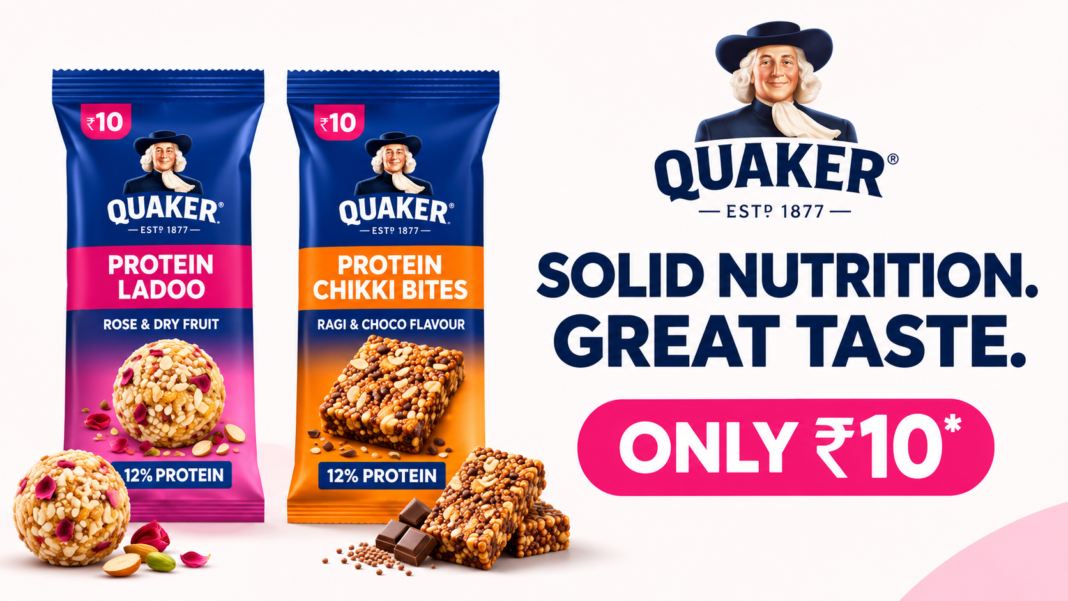
Quaker Protein Ladooz and Quaker Protein Chikki Bites have arrived, as PepsiCo India widens its Better-for-You snacking range and takes the Quaker oats brand beyond the breakfast table. The two snacks combine real oats with 12% protein and high fibre in familiar Indian formats, and both are priced at ₹10.
The launch comes with a PepsiCo-backed study claiming that most urban Indians miss their protein and fibre targets, and that cost is a big reason. Below we set out what was announced, what the study says and what a ₹10 protein snack does and doesn’t tell us.
Quaker Protein Ladooz: 7 Key Facts
- Products: Quaker Protein Ladooz and Quaker Protein Chikki Bites.
- Flavours: Rose Dry Fruit Ladooz and Ragi Choco Chikki Bites.
- Price: ₹10.
- Nutrition claims: Real oats, 12% protein and high fibre.
- Free from: Artificial flavours and palm oil.
- Research: A study with Euromonitor International and the Indian Institute of Millet Research (IIMR).
- Campaign: A new film on the taste-versus-nutrition dilemma in snacking.
What PepsiCo India Launched
PepsiCo India says the range brings the nutritional benefits of oats into traditional Indian snack formats, so consumers can try alternatives without changing established eating habits. It positions the launch as part of a wider ambition to “democratise nutrition” by making protein- and fibre-rich snacks more relevant to everyday occasions.
| Product | Flavour | Format |
|---|---|---|
| Quaker Protein Ladooz | Rose Dry Fruit | Ladoo |
| Quaker Protein Chikki Bites | Ragi Choco | Chikki |
Both are priced at ₹10, with 12% protein, high fibre and real oats, and are made without artificial flavours or palm oil.
The Study Behind the Launch: “The State of Protein & Fibre in Urban India”
To understand what keeps people from eating enough protein and fibre, PepsiCo India worked with Euromonitor International and the Indian Institute of Millet Research on a study titled The State of Protein & Fibre in Urban India. It looked at consumer perceptions and how these nutrients fit into daily diets.
| Finding | Share of Respondents |
|---|---|
| Consume less than 41 grams of protein a day | 70% |
| Fall short of recommended daily fibre intake | 61% |
| Cite high cost as a reason for not eating enough protein | 60% |
| Gen Z, Millennials and Gen X who want protein in familiar, everyday food formats | 89% |
The company says these insights show an opportunity to close nutritional gaps by building protein and fibre into products that match existing habits.
The Campaign
Alongside the products, Quaker released a campaign film about the everyday dilemma of choosing between taste and nutrition when snacking. It reinforces the pitch of bringing nutrition into familiar food without giving up taste.
Here is the campaign film:
Our Analysis: What the Quaker Protein Ladooz Launch Really Signals
This section is our own analysis and opinion, based on the announcement. It is not nutrition, medical or investment advice, and the observations are not statements from PepsiCo.
1. ₹10 is the real headline, not the protein
India’s snack market runs on small, low-priced packs, and ₹10 is a classic entry point. Pricing a protein snack there lets PepsiCo compete with chips, biscuits and namkeen at the same shelf and wallet level, which is exactly the barrier its own study highlights: 60% of respondents say cost holds them back. In our view, the price is the product strategy.
2. The release doesn’t say how big the pack is, and that changes everything
A ₹10 snack with “12% protein” sounds strong, but the announcement gives no pack weight, no protein per serving and no word on whether 12% is by weight or by calories. A small pack could deliver only a few grams of protein, which would be a modest contribution against the study’s 41 grams benchmark. We can’t calculate it, and neither can readers. That is the first thing to check on the label.
3. The study is useful, but it comes from the seller
PepsiCo commissioned research that finds a gap its product claims to fill. That doesn’t make the numbers wrong, and the involvement of Euromonitor and IIMR adds credibility. But it is standard to treat company-sponsored research with caution. The announcement doesn’t give the sample size, the cities covered, the survey dates or how respondents were chosen. Without those, the 70%, 61%, 60% and 89% figures are best read as indicative.
4. The “41 grams” figure is unexplained
The study counts people who eat less than 41 grams of protein a day, but the announcement doesn’t say why 41 grams is the cut-off or whether it matches any official recommendation. Protein needs vary by body weight, age and activity. We would not read “70% fall short” as a medical finding until the target is explained.
5. Familiar formats make sense, but they are also a marketing move
Choosing ladoo and chikki is smart. Both are well-known, trusted, low-risk snacks, and no one has to learn how to eat them. Putting oats and protein into them lets the brand say “nothing changes except the nutrition.” It also lets a breakfast brand step into a new part of the day, which supports PepsiCo’s wider aim of extending Quaker beyond breakfast. Chikki has traditionally been a nut-and-jaggery snack, so Quaker is entering a space where customers already have strong expectations of taste and texture. Whether an oats-based version meets them is a question only buyers can answer.
6. Ragi is a quiet signal
Including ragi (finger millet) in the chikki flavour, and working with a millet research institute, ties the launch to the wider push for millets in Indian food. It also gives the range a story that goes beyond protein. We’d guess it helps the products appeal to health-conscious families, though the announcement doesn’t say that.
7. “Protein” is now a mass-market claim, and scrutiny will follow
Protein labelling has become a major selling point in packaged food. As more brands add it to low-priced snacks, consumers and regulators are paying closer attention to how claims are made and what they actually deliver. That is general commentary, and the release doesn’t mention regulators. Readers should check the nutrition panel and not just the front-of-pack claim.
8. What we would watch
We’d watch whether the products reach small shops and general trade at ₹10, since that’s where price-led snack launches succeed or fail, whether the nutrition label supports the headline claims and whether repeat purchase follows. The announcement tells us the intent, and the shelf will tell us the result.
What Shoppers Should Check Before Buying
- Pack weight and how many grams of protein and fibre you actually get per pack
- Whether 12% protein refers to weight or energy
- Sugar and fat content, which the announcement doesn’t mention
- The ingredient list, since “real oats” doesn’t tell you the proportions
- Allergen information (nuts and other allergens are common in ladoos and chikki)
- Price per 100 grams compared with similar snacks
What We Still Don’t Know
- Pack weight and nutrition per pack
- Launch date, cities and sales channels
- Study sample size, method and cities
- How 12% protein is measured
- Sugar, calorie and fat levels
- Sales targets or distribution plans
- Whether more flavours are coming
What to Watch Next
- Availability in kirana stores and quick-commerce apps
- Independent nutrition comparisons with other protein snacks
- Competitor responses from other snack and oats brands
- More Quaker snacking launches
- Further data from the protein and fibre study
Frequently Asked Questions About Quaker Protein Ladooz
What is Quaker Protein Ladooz?
It is a ladoo snack from Quaker, made with real oats, 12% protein and high fibre, launched by PepsiCo India in a Rose Dry Fruit flavour.
What are Quaker Protein Chikki Bites?
A chikki-style snack from Quaker in a Ragi Choco flavour, with the same real oats, 12% protein and high fibre claims.
How much do they cost?
Both are priced at ₹10.
Do they contain artificial flavours or palm oil?
According to PepsiCo India, they are made without artificial flavours or palm oil.
What did the PepsiCo study find?
The study with Euromonitor International and IIMR reports that 70% of respondents consume under 41 grams of protein daily, 61% fall short of their fibre intake, 60% cite cost as a barrier to protein and 89% of Gen Z, Millennials and Gen X want protein in familiar food formats.
Where can I buy them?
The announcement does not say where or from when they will be sold.
Are these snacks healthy?
PepsiCo positions them as Better-for-You, but that is a company claim. Check the nutrition label and consider your own dietary needs, and speak to a doctor or dietitian if you have specific health goals.
Disclaimer
This article is based on a launch announcement from PepsiCo India. Product, nutrition and research claims are the company’s and have not been independently verified or tested by this site. The “Our analysis” section is opinion and not nutrition, medical or financial advice. Check product labels and consult a qualified professional for dietary guidance. This site is not affiliated with PepsiCo or Quaker.
To read more FMCG and food coverage, see our posts on Marketing. You can also read the original announcement on MediaNews4U and visit the PepsiCo India website.